
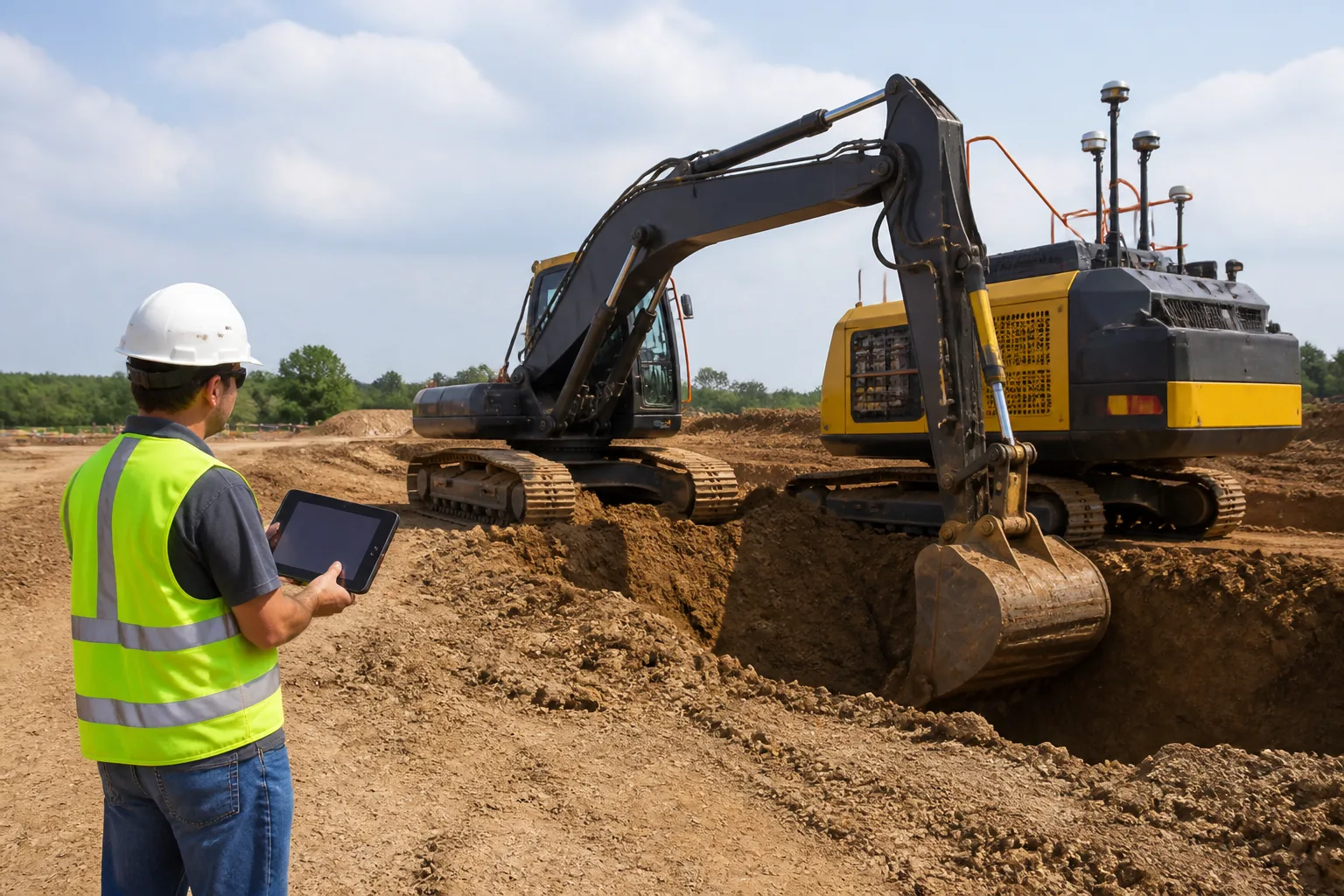
Bedrock Robotics has launched the first fully autonomous excavator deployments on live U.S. infrastructure sites, marking a significant advance in construction robotics. The systems are now operating without human drivers at locations including a Nevada water treatment facility, a large-scale earthwork project in Texas, and a civil sitework project with over 1.2 million cubic yards in volume.
Key Highlights
- This is reportedly the first instance of excavators operating completely autonomously in real-world, live customer environments, not just in testing or controlled conditions according to Bedrock Robotics.
- The deployments are part of efforts to meet rising infrastructure demands with technology-driven efficiency.
The move underscores how AI and robotics are transitioning from laboratory prototypes to production-ready systems capable of transforming heavy industry workflows.
Introduction to Autonomous Excavators
Bedrock Robotics has achieved a remarkable milestone by launching the first fully autonomous excavator operations on live infrastructure sites across the United States. This groundbreaking deployment signifies a pivotal moment in the field of construction robotics, as it showcases the potential of autonomous systems in real-world applications. The advanced technology allows excavators to function without human operators, highlighting a significant shift towards integrating Artificial Intelligence (AI) in heavy machinery use. As infrastructure demands grow, leveraging autonomous equipment could lead to increased productivity and enhanced operational efficiency in construction projects.
In addition to marking a technical achievement, this deployment also addresses challenges within the construction industry, such as labor shortages and the need for improved safety measures on job sites. By utilizing autonomous excavators, projects can progress more smoothly while minimizing risks to human workers. The successful implementation of these systems raises key questions about the future of employment in heavy industries, shifting the focus towards new roles that complement autonomous machinery.
Significant Infrastructure Projects
The autonomous excavators are currently engaged in several significant projects across the U.S. Notable locations include a water treatment facility in Nevada, where the machines are handling crucial earthmoving tasks necessary for its operation. In Texas, these excavators are deployed on a large-scale earthwork initiative, demonstrating their ability to manage extensive volumes of soil movement efficiently. Additionally, a major civil sitework project featuring over 1.2 million cubic yards of material further showcases the capacity of these autonomous systems to perform complex and large-scale tasks.
Such projects illustrate not only the practical applications of autonomous technology but also its potential to reshape construction methodologies, contributing to smarter and more efficient infrastructure development. As these excavators engage actively in diverse environments, they underscore a growing trend in the industry towards embracing automated solutions for traditional processes. Ultimately, this progression reflects a broader commitment to utilizing cutting-edge technology in responding to modern architectural and civil engineering challenges.

