Start with the problem.
A sensor event is not automatically a valid stock movement. The design must decide which device can report an event, how it maps to business records and what happens when the same message is received twice or the connection fails.
A practical way forward.
Validated device events
Associate each incoming event with a known device, item, location and operator or production context.
Reliable transaction handling
Use durable queues, unique event identifiers and reconciliation so retrying a message does not create duplicate stock or production records.
Operational continuity
Define the local workflow during outages and how exceptions are reviewed when connectivity returns.
The workflow, simply.
- Physical event
- Validation & mapping
- ERP transaction
- Reconciliation
Architecture to consider.
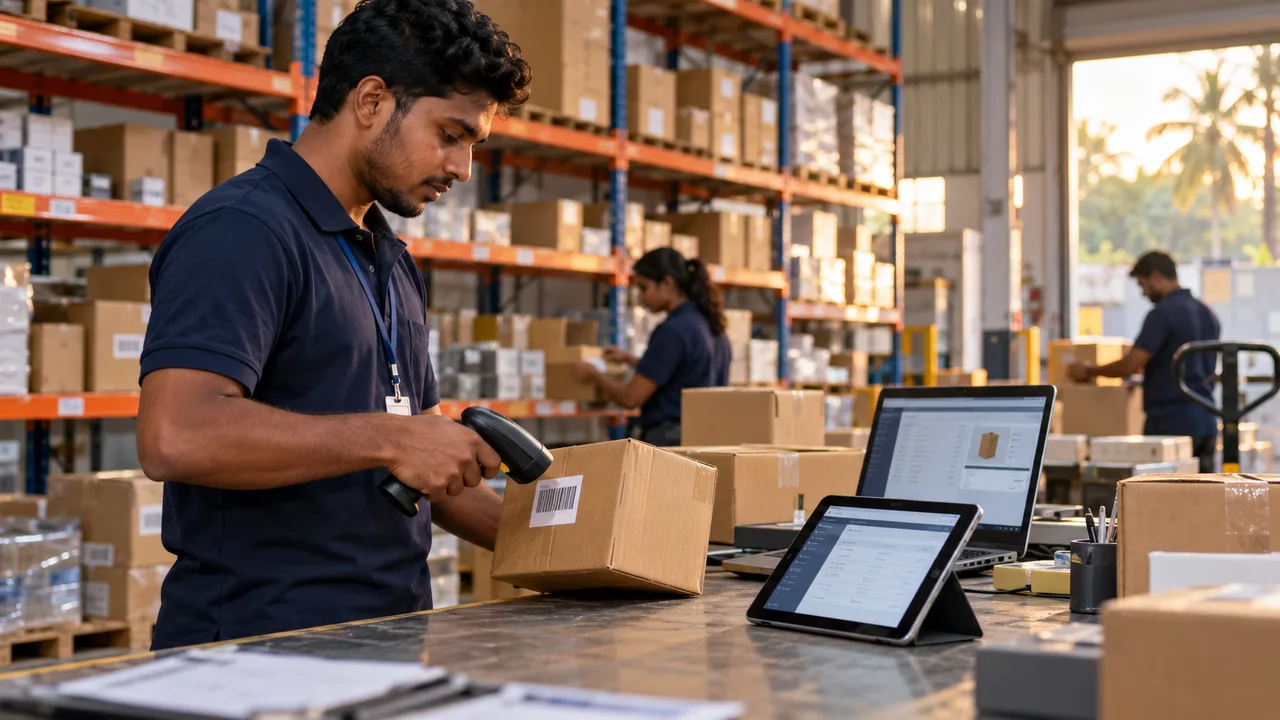
Scanners, scales or machine gateways produce timestamped events through supported interfaces.
Middleware validates identity, units and record mappings before publishing to a durable queue.
ERP APIs apply authorised transactions with idempotency and an exception review screen.
How success should be tested.
- Replay duplicate, delayed and out-of-order events.
- Reconcile device event totals with the ERP's accepted transactions.
- Test the complete outage, recovery and manual exception workflow.
Useful things to know.
Can IoT devices update stock automatically?
They can feed an agreed automation workflow, but the business must define validation, permissions and reconciliation before device events are allowed to change stock.
What makes this a hybrid ERP design?
Selected local operations can continue under an agreed offline workflow, while cloud services support central coordination. Offline permissions and synchronisation rules must be defined explicitly.