
Built around your operation
Fruit and vegetable wholesale ERP for Sri Lankan suppliers
Connect farmer purchasing, produce grades, weighings, container deductions, Sinhala bills, English invoices and buyer catalogues in a tailored ERP.
Kaduwela, Sri Lanka · Local and remote delivery
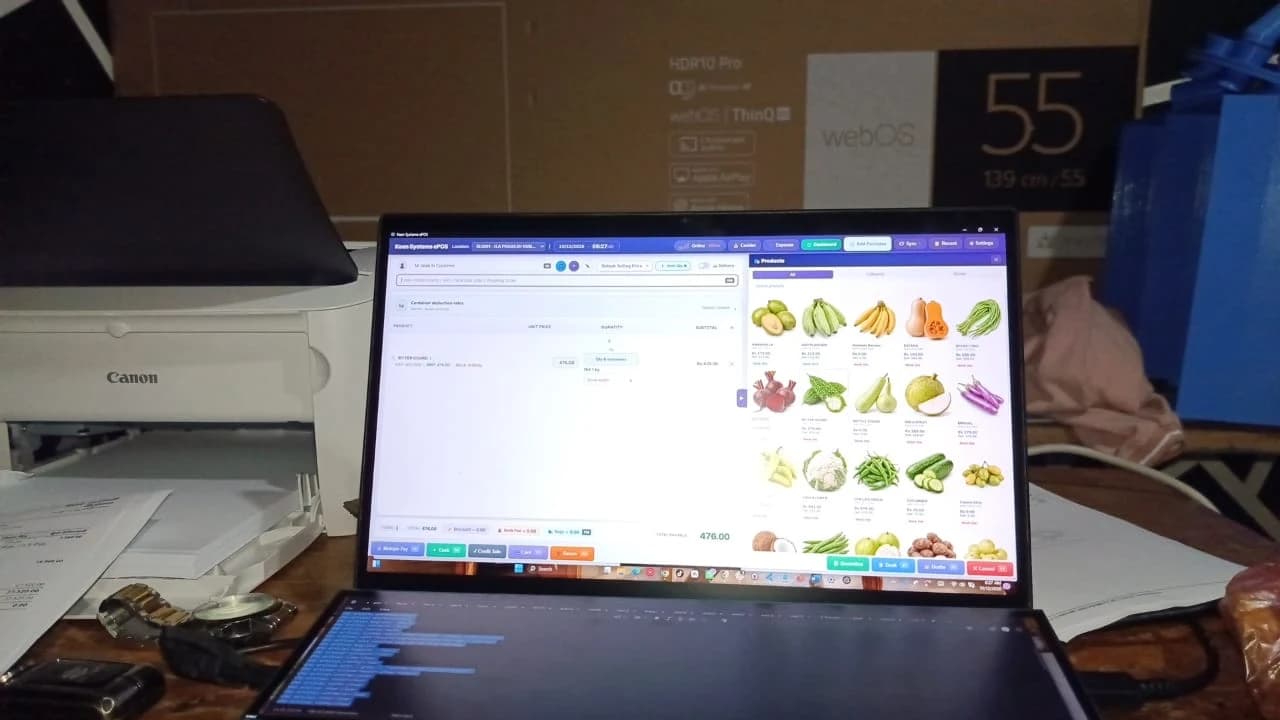
Produce collectors, fruit and vegetable wholesalers, supermarket suppliers
Where to begin
Keep the grower’s weight, the selected grade and the buyer’s bill connected.
A produce wholesale ERP should follow the business from farmer receiving to buyer dispatch: record separate weighings, calculate net quantities, preserve staff-led grade decisions and produce documents each trading partner can check. A shareable catalogue can support the daily price conversation.
Follow the work
A connected operating flow
- 01
Receive from farmers
Record supplier, produce and each weighing in a checkable purchase record.
- 02
Sort and grade
Staff inspect quality and use consistent product or grade names.
- 03
Prepare buyer supply
Select quantities and the agreed buyer price for the sales document.
- 04
Share and settle
Provide bills, update the catalogue and track payments separately.
Explain gross weight, containers and the final purchase quantity
Produce is often received in several baskets or containers. Store the separate readings and the agreed deduction basis so a farmer can follow the resulting net weight. A document that shows only the final amount leaves the most important conversation unexplained.
During discovery, establish whether a deduction is a measured container tare, a fixed amount per container or another agreed adjustment. Keep quality allowances distinct from physical container weight. Work through a representative example with the team before finalizing the bill layout.
- Separate weighings and a stated unit of measurement
- Container count and deduction basis
- Net quantity, rate, payments and remaining balance
Let staff-led quality decisions flow into stock and dispatch
The team decides which produce meets a buyer’s quality requirement. Consistent grade naming helps prevent a purchase item, stock item and invoice line from describing the same product differently. Define how downgraded or rejected produce is recorded.
For businesses that need traceability, agree the receiving reference and lot information that should follow produce into storage and dispatch. That requirement must be scoped explicitly; an attractive billing screen by itself does not establish end-to-end traceability.
Give farmers Sinhala bills and buyers clear English invoices
The H.A. Prabash Kumara implementation demonstrates this bilingual approach: Sinhala farmer purchase bills and English wholesale sales invoices, with weighings, deductions and payments explained in the relevant document.
For your implementation, bring a current purchase book and a buyer invoice. Confirm produce names, rounding, payment terms, address fields and page formats. Review a printed sample with the people who receive the documents, as well as the staff who enter them.
Keep daily price communication connected to the published catalogue
A catalogue link gives buyers a place to browse produce and consult the supplier’s currently published prices. Staff still decide when to update prices and which buyers receive the link. An online list can complement a printed PDF without requiring a separate manually typed message for every item.
The published H.A. Prabash Kumara project includes phone and desktop catalogue views. Use it to discuss the buying experience, then agree product visibility, search, units and PDF requirements for your own business.
Acceptance starts with the real task
What to demonstrate before rollout
0 of 8 reviewed
Use this as a discussion checklist. Ticks are kept only while this page is open.
Download the blank checklistDelivered work you can inspect
Relevant client implementations
Questions before the next step
Common planning questions
Does the ERP automatically inspect produce quality?
Quality inspection and grading are staff-led. The software supports the product, quantity, purchase and sales records around those decisions.
Can farmers and supermarket buyers receive different bill languages?
Yes. The published H.A. Prabash Kumara implementation uses Sinhala purchase bills and English buyer invoices. Required wording, calculations and formats are agreed during document design.
Can we share updated fruit and vegetable prices with buyers?
A published catalogue can provide one shareable URL and a downloadable price list. Staff update the entries and choose how to share the link; messaging automation would be a separate agreed scope.
Is an electronic weighing scale required?
The workflow can be assessed around entered weighing readings. Direct scale integration depends on the exact device and interface and should be separately demonstrated if required.
Supporting references
For a traceability scope, GS1 describes receiving and shipping events and the associated product, lot, quantity and net-weight data. Standards alignment must be assessed for the individual implementation. GS1 fresh fruit and vegetable traceability guideline (opens a new tab)
Bring the operating problem
Let’s work through your actual requirements.
Tell us your business type, users, branches, current system and the task you want to improve. We’ll use that context to discuss the right next step.