The work behind the system.
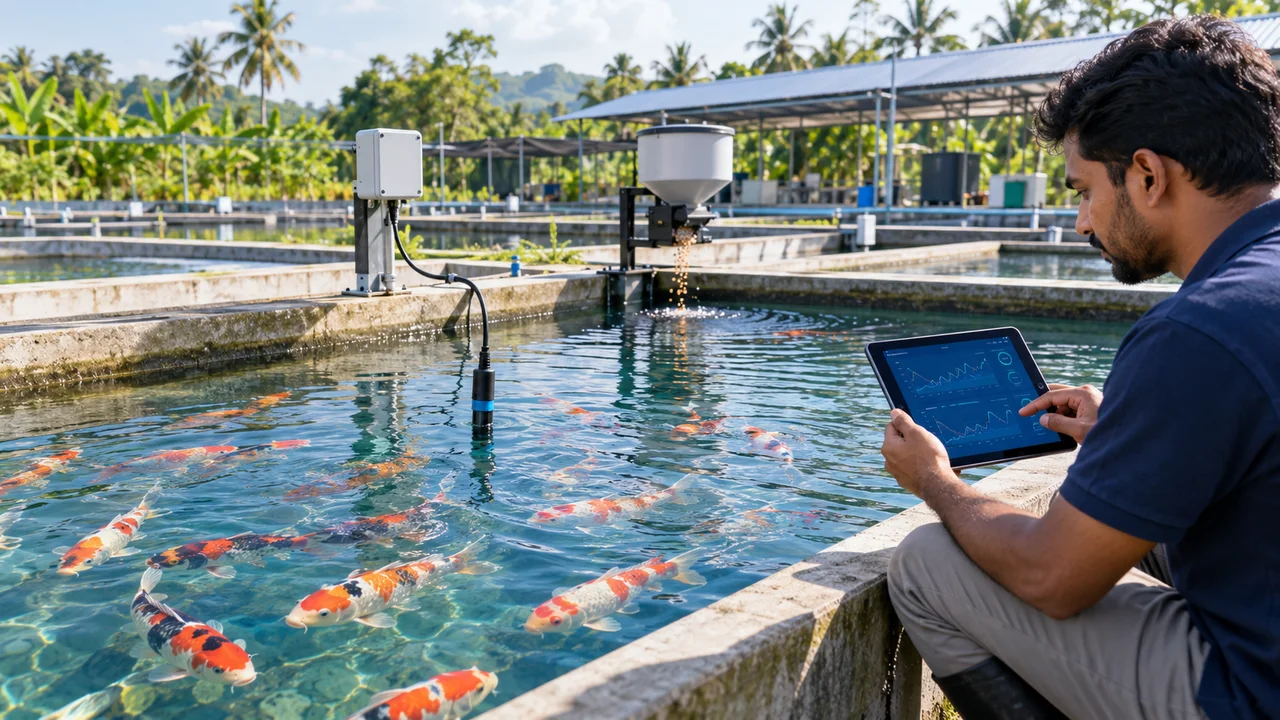
Fish-farm teams need timely visibility into water conditions and feeding activity. The published portfolio connects IoT monitoring and AI-related health-detection work with an operational dashboard.
What the project brings together.
Water-quality visibility
Bring measured water conditions into the monitoring workflow for operator review.
Feeding automation
Connect the listed automated-feeding function to farm operations and monitoring.
Health and dashboard context
Present the portfolio's health-detection and dashboard work alongside the IoT data.
The workflow, simply.
- Sensor readings
- Gateway collection
- Dashboard review
- Operator or feeding action
Architecture overview.
ESP32 devices and Raspberry Pi provide the recorded connected-device stack.
MQTT provides the messaging protocol listed for the project.
Python supports the processing side of the portfolio system.
Checks for a comparable deployment.
- Calibrate sensors and compare readings with reference measurements.
- Check feeding limits, manual intervention and connectivity loss.
- Evaluate health-detection outputs before relying on them for operational action.
Useful things to know.
What can IoT monitoring add to an aquaculture operation?
It can bring water-condition readings and equipment activity into a shared view. This portfolio also lists automated feeding and health-detection work.
Should an alert automatically control feeding?
Control behaviour must be agreed and validated for the farm. Manual override, safe limits and behaviour during sensor or network faults are part of a comparable engineering review.