Start with the problem.
Fixed watering schedules cannot see changing soil conditions, and a cloud-only control system may become unusable when rural connectivity drops. This study puts local operating limits, operator control and trustworthy readings ahead of automation complexity.
A practical way forward.
Field visibility
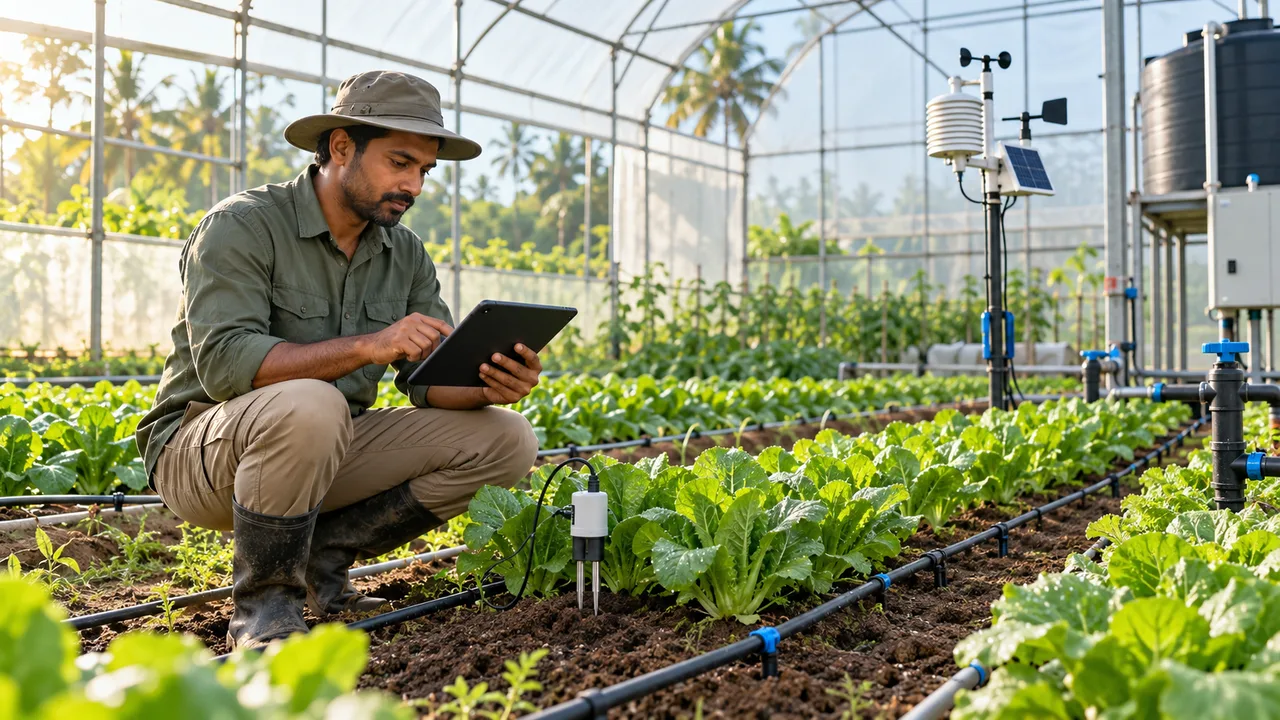
Group readings by plot, crop and sensor depth so staff can interpret conditions in their agricultural context.
Supervised irrigation
Use approved schedules and limits, with manual override and an explicit safe behaviour for missing or implausible sensor data.
Farm history
Record irrigation events and conditions so the team can compare decisions across plots and seasons.
The workflow, simply.
- Measure field conditions
- Check operating limits
- Approve or schedule watering
- Review the field log
Architecture to consider.
Low-power sensors and gateways are selected for range, terrain and site power.
Local controllers enforce agreed irrigation limits independently of the cloud dashboard.
A mobile-friendly portal stores readings and event history; weather feeds are optional inputs.
How success should be tested.
- Calibrate readings in the actual soil and sensor placement.
- Test valve faults, loss of power and loss of connectivity.
- Compare water usage and crop observations against a measured baseline.
Useful things to know.
Does smart irrigation guarantee lower water use?
Savings depend on the crop, soil, current practice and system tuning. A pilot should measure water use and crop conditions before any improvement is claimed.
Can the system work with weak internet?
The design can keep agreed local control and buffer readings during outages. Remote visibility and synchronisation resume when connectivity is available.