Start with the problem.
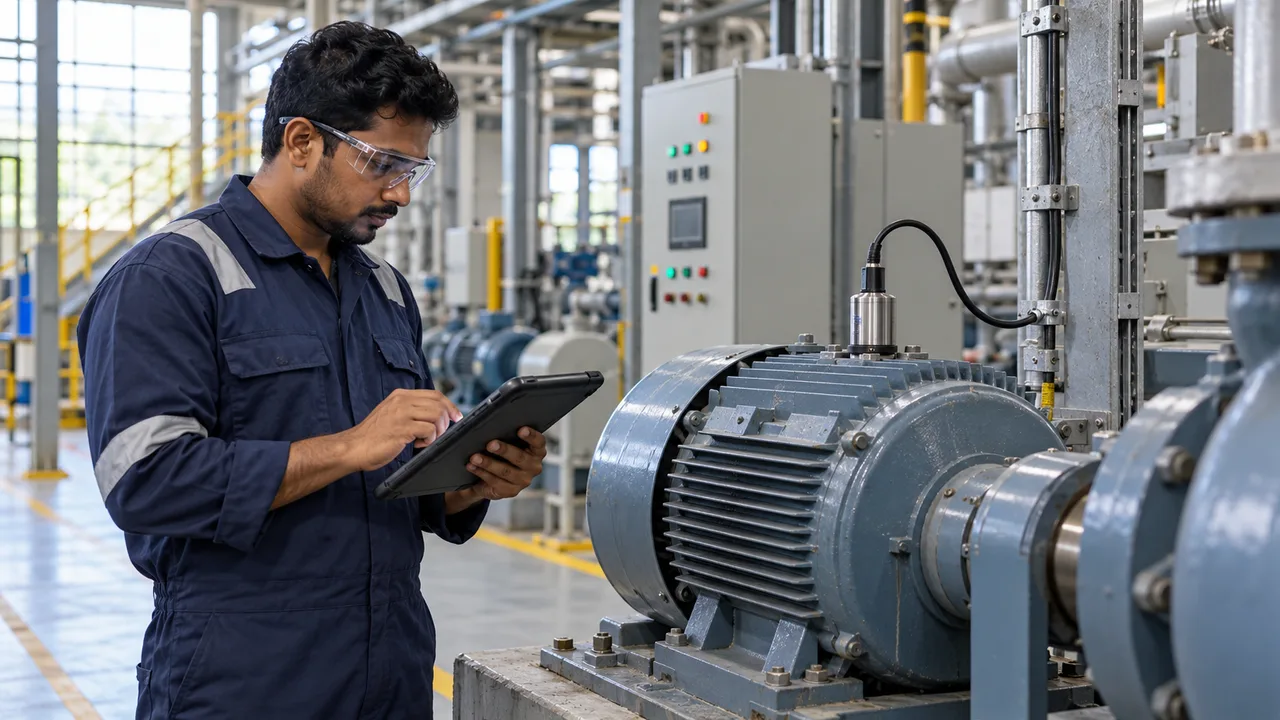
Periodic manual inspections leave gaps between readings, while isolated machine displays make fleet-wide review difficult. The proposed system connects selected equipment to a monitoring dashboard without assuming every machine should be controlled remotely.
A practical way forward.
Relevant telemetry
Choose vibration, temperature, energy or run-state signals based on the equipment and maintenance question, then establish calibration and sampling requirements.
Actionable alerts
Route threshold or trend exceptions to a named owner, using acknowledgement and escalation to avoid an uncontrolled stream of notifications.
Maintenance context
Connect device history to equipment identity and service records so technicians can review a condition alongside prior work.
The workflow, simply.
- Equipment sensors
- Edge gateway
- Condition dashboard
- Maintenance action
Architecture to consider.
Industrial sensors connect through suitable gateways using the protocols available on site.
MQTT or HTTPS transports timestamped readings with device identity and buffered recovery.
A time-series data layer powers dashboards and alerts, separated from any safety-critical control loop.
How success should be tested.
- Compare sensor readings with a reference instrument.
- Test stale data, device failure and network interruption alerts.
- Verify remote monitoring cannot unintentionally issue machine-control commands.
Useful things to know.
Can older machines be monitored?
Often yes, using external sensors or a supported industrial interface. A site survey must confirm electrical safety, sensor mounting, available signals and network conditions.
Does monitoring automatically predict failures?
No. Initial monitoring may use thresholds and trends. Predictive maintenance needs reliable failure-labelled history and evaluation against the equipment's real operating conditions.